Wicking cotton: choosing it and fitting it properly
Vapers agonise over a build to the last tenth of an ohm, fine tune the airflow, then rush the wick. Yet the wicking cotton is the part that carries liquid to the heated wire, and on its own it decides whether the vape comes through clean or arrives with a scorched edge.
Between organic pads, pre rolled laces and the Japanese sheets that British shops have stocked for over a decade, the choice confuses people almost as much as the fitting itself. This piece separates the materials, then walks through the fitting from pulling the strand to the final priming.
Which wicking cotton to choose
The best wicking cotton is a fully natural fibre, unbleached and free of additives, able to absorb quickly without holding on to flavour. Three families share the British shelves: organic cotton in pads or laces, Japanese cotton with its reputation for neutrality, and preformed pads ready to cut to width.
All three aim at the same two things, fast capillary action and a clean aromatic result. What is left is a question of handling and personal habit, which is why experienced vapers rarely argue the point for long.
The parameter worth watching is purity. Bleached or treated fibre can release a faint chemical note on the first few puffs, unpleasant and entirely avoidable. The well known references sold here, whether pads or organic laces, meet that requirement and suit a first build perfectly well.
There is no need to collect brands to get started. A single versatile organic cotton is enough, and the reference names differ mainly in texture and ease of shaping rather than in any radical change of flavour. A beginner gains far more from mastering one fibre than from comparing five, because consistency in the fitting counts for more than the name on the packet.
The main families of fibre
Each type of fibre has its followers and its natural uses. Telling them apart stops you buying something poorly matched to your atomiser, which is where most wasted packets come from.
Lace cotton arrives already rolled to a working diameter, goes in without shaping and suits beginners very well. Pad or sheet cotton is cut into strips at whatever width you want, which gives total control over density but asks for a little practice.
Japanese cotton, sold in flat sheets, is folded and rolled for a very pure aromatic result and remains the favourite of flavour chasers. None of these families is objectively better than the others. The best one is the one whose diameter and texture suit the coil in front of you.
Getting the density right
The density of the wick matters more than the brand on the bag. Too much fibre starves the coil, too little floods it, and the gap between the two is narrower than most guides admit.
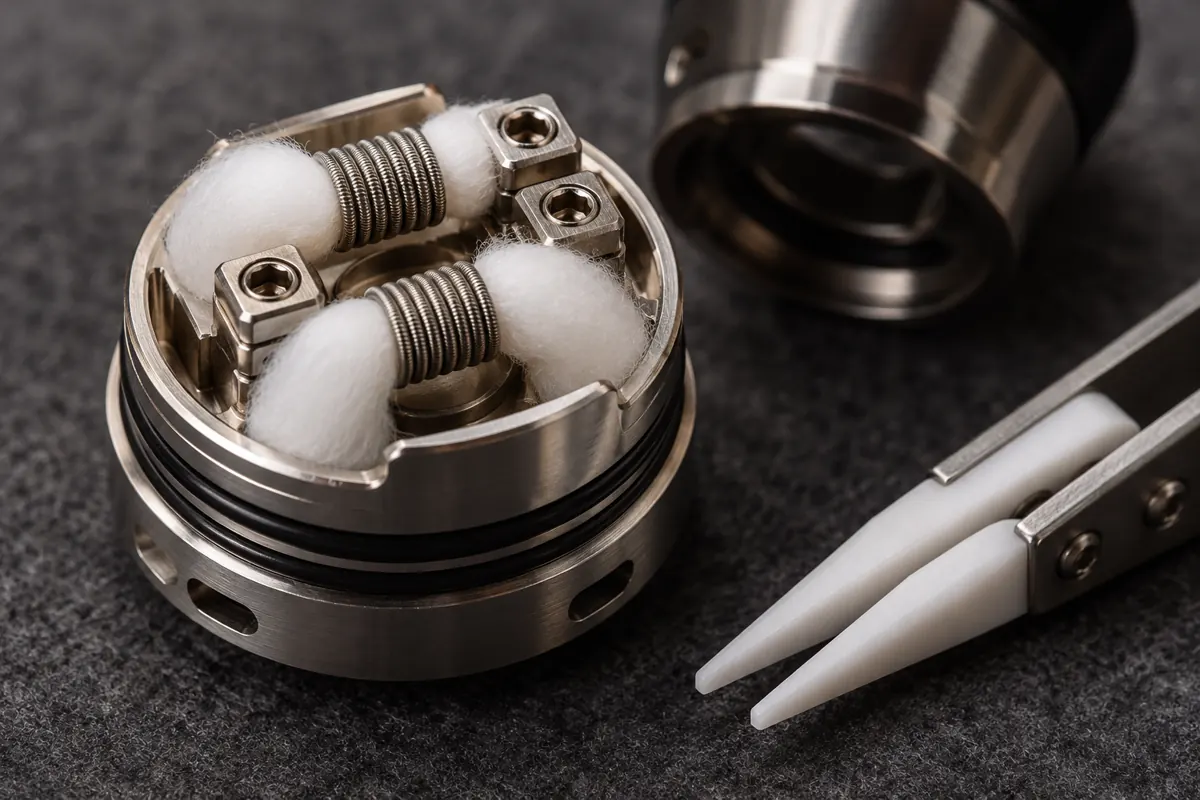
The rule comes down to a sensation rather than a measurement. The strand should pass through the wraps with slight resistance, without you forcing it and without it floating loose. Take a strand a fraction wider than the inside of the coil, roll one end to a point, and feed it through.
If the fibre tears as it passes, it is too thick. If it slides through on its own, it is too thin. That correct density feeds the wire without choking it, and it prevents most of the everyday annoyances, including the burnt taste of a badly fed build. Well judged fibre is the first line of defence against a dry hit.
Fitting the wick without choking the coil
Wicking does not end at insertion. How you trim, fluff and place the tails decides how fast liquid climbs back to the coil between puffs, and it is where most builds are won or lost.
Once the strand is through, cut it to the length of the channels on the deck. Too short and the tails dry out, too long and they fold back on themselves and compact at the bottom of the well.
Fluff the ends to open the fibre and encourage absorption, then lay them into the wells gently, without pressing them down. On a tank style build the tails should touch the liquid without letting it flood upwards. Then wet each tail and the coil itself, let it drink for a minute, and prime at low power.
Rinsing raw organic fibre
Here is a detail most guides skip. Some untreated organic fibres keep a faint earthy note over the first wick or two, noticeable to anyone paying attention on a fresh build.
To clear it you can rinse the fibre under clean water and dry it thoroughly before use, or simply sacrifice the very first puffs while the liquid rinses it for you. The precaution is optional on fibre already cleaned at the factory.
On the rawest fibres, though, it makes a real difference to aromatic purity. It is the sort of small habit that costs a couple of minutes and quietly separates a careful build from an average one.
The most common wicking cotton mistakes
A handful of gestures come up again and again with beginners and quietly sabotage builds that are otherwise correct. Knowing them is most of the way to avoiding them.
The first mistake is fibre packed too densely, crammed into the coil out of a fear of leaks. It blocks the liquid climbing back and produces dry heating. The second is the opposite, a thin wick that lets liquid flood the deck.
Then comes fibre cut too short, whose tails no longer reach the liquid in the tank, or cut too long, which folds and compacts in the wells. Finally, plenty of people forget to fluff the ends, when opening the fibre is exactly what speeds up absorption.
Good wicking cotton fitted badly does the same job as poor cotton fitted well, which is to say not much. Choosing the material never excuses rushing the fitting, and revisiting those four points corrects the majority of failed wicks without touching the coil.
Frequently asked questions
How often should I change the wick in a rebuildable?
As soon as the flavour dulls or the fibre browns, which in practice means every two to four refills depending on the liquid. Heavily sweetened liquids foul a wick faster. Changing it is quick and restores a clean result without touching the coil at all.
Can I use ordinary chemist cotton wool for vaping?
It is a bad idea. Chemist cotton wool is usually bleached and treated, which risks residue when it is heated. Fibre sold for vaping is unbleached and made to sit against a hot coil without altering the flavour, and the saving does not justify the gamble.
Why does my fibre go black so quickly?
Rapid browning usually means the wattage is too high for the build, or the liquid is loaded with sweeteners. Dropping the power slightly and spacing out refills slows it down. Fibre that genuinely carbonises, rather than browning, points at a feeding problem to fix.
Should I pack the fibre tightly into the coil?
Never. Packed fibre blocks the liquid coming back and produces dry heating. It should fill the coil without compressing it, with just enough material to touch the wraps all the way round. Suppleness matters more than quantity.
Does the fibre really change the taste of an e-liquid?
Yes, especially over the first few puffs. Pure, well rinsed fibre lets the flavours through without colouring them, while treated or badly primed fibre adds a note of its own. Over time the gap between two good fibres narrows, but it stays noticeable to a fussy palate.
Wicking your rebuildable for a clean vape
Wicking cotton is not a secondary consumable. It is the bridge between the liquid and the wire, and its density alone decides how pure the result is, whatever else you get right on the deck.
Choosing a natural unbleached fibre, sizing the strand to the right diameter and taking care over the fitting is worth more than any premium coil. That attention to the wicking cotton is what separates a clean rebuildable build from an approximate one, and it is where a new vaper should spend their practice time first. The rest of the sequence, from tools to the reading on the ohm reader, is set out in our guide to building a coil, while the formats that hold it all are compared in our piece on RDA, RTA and RDTA atomisers.
Editorial content for adult readers only. Vaping products usually contain nicotine, a substance that causes addiction. Not for sale to under-18s in the United Kingdom. This article is not a buying recommendation.